

Posted by L’équipe Ameublement à rabais
on September 26, 2026

Table of Contents
- Comparative table of the best gazebos 2026
- Hardtop vs. soft-top gazebo: which model to choose
- Construction materials: aluminum, steel, and polycarbonate
- Buying guide: essential criteria for choosing your gazebo
- Outdoor gazebo maintenance and seasonal durability
- Outdoor patio layout with gazebo and accessories
- Specialized gazebos: barbecue, pergolas, and outdoor fireplaces
- Installation, anchoring, and site preparation
- Frequently Asked Questions
Last updated: September 27, 2026
Comparative table of the best gazebos 2026
Garden gazebos stand out for their ability to turn an outdoor space into a welcoming relaxation zone. According to Shade N Shelters, 10x12 foot, 12x14 foot, and 12x16 foot models dominate the market for their versatility and value for money. Ameublement à rabais offers a selection of hardtop and soft-top gazebos that meet the needs of Quebec and Canadian homeowners looking to maximize their outdoor space.
| Model | Roof Type | Dimensions | Main Materials | Price | Best For |
|---|---|---|---|---|---|
| 10 x 10 Polycarbonate Gazebo | Hardtop | 10 x 10 ft | Steel, aluminum, polycarbonate | $614.99 | Small patios, limited budget |
| 10 x 13 Double-Roof Gazebo | Soft-top | 10 x 13 ft | Steel, polyester | $239.99 | Temporary setups, flexibility |
| 12x15 Polycarbonate Gazebo | Hardtop | 12 x 15 ft | Aluminum, polycarbonate | $1,299.99 | Large spaces, intensive use |
| 10 x 13 Galvanized Steel Gazebo | Hardtop | 10 x 13 ft | Galvanized steel, aluminum | $1,558.99 | Maximum durability, harsh climate |
| 11 x 11 Folding Shelter | Soft-top | 11 x 11 ft | Powder-coated metal, polyester | $203.99 | Portability, occasional events |
Pro Tip
The recommended snow load varies by model. For regions with harsh winters, check that the gazebo can support the accumulated snow load without risk of deformation.
Hardtop vs. soft-top gazebo: which model to choose
Choosing between a hardtop and a soft-top depends on your intended use and budget. A hardtop gazebo offers permanent protection and better thermal insulation, while a soft-top allows for quick installation and easy storage. Modern Shade points out that wind resistance and the choice of roofing material are the two critical factors determining long-term durability.

Hardtop gazebos: These structures use materials like polycarbonate, galvanized steel, or treated wood. They resist extreme weather conditions better and are suitable for permanent installations. The hard roof prevents water accumulation and provides ventilation in hot weather. The initial investment is higher, but the longevity may justify the cost for homeowners planning for long-term use.
Soft-top gazebos: Featuring polyester or treated fabric covers, these models offer maximum flexibility. They can be installed quickly, stored easily, and are suitable for seasonal events. However, they require regular maintenance, including cleaning the fabric and inspecting the seams.
Key Point
For year-round use in a Canadian climate, a hardtop made of polycarbonate or galvanized steel offers a good balance between durability, protection, and reduced maintenance.
Construction materials: aluminum, steel, and polycarbonate
Construction materials determine the durability, maintenance, and overall appearance of the gazebo. Austin Gallery identifies three dominant materials for quality outdoor structures.
Powder-coated aluminum: Lightweight and corrosion-resistant, aluminum is ideal for coastal or humid regions. It does not rust and requires little maintenance. However, it is less robust than steel for very large structures. 3.9-inch reinforced aluminum columns provide adequate stability for most residential applications.
Galvanized steel: This material combines the strength of steel with corrosion protection. Galvanized steel resists heavy snow loads and is perfectly suited for Canadian winters. It is heavier than aluminum, which improves overall stability. Maintenance is limited to occasional cleaning to preserve its appearance.
Polycarbonate: Used for hardtops, UV-treated polycarbonate offers partial transparency while blocking harmful rays. It prevents water accumulation thanks to its peaked shape and promotes better air circulation. Polycarbonate is impact-resistant.
Ideal For
Homeowners in Quebec and regions with harsh winters: a galvanized steel frame combined with a polycarbonate roof offers effective protection against snow, wind, and humidity.
Buying guide: essential criteria for choosing your gazebo
Selecting the best garden gazebo for 2026 requires evaluating several fundamental criteria. According to ShelterLogic, the four priority criteria are structural durability, weather protection, ease of assembly, and material composition.
Dimensions and available space: Measure your patio or garden before buying. Popular 10x12 foot and 12x14 foot models offer a balance between covered space and footprint. For small spaces, a 10x10 foot gazebo is sufficient. For large gatherings, consider a 12x15 foot or larger.
Wind resistance: Check the wind resistance level indicated by the manufacturer. A gazebo must withstand at least 39 to 49 km/h winds with properly driven ground stakes. For windy regions, look for a level 6 resistance or higher.
Snow load: Canadian winters impose significant snow loads. A gazebo must support accumulated snow load without deformation. Check this specification on the product technical sheet.
Ease of installation: Assembling a hardtop gazebo generally requires 2 to 4 people and 4 to 8 hours. Soft-top gazebos can be set up in 30 minutes. Evaluate your ability to assemble the product or budget for professional installation.
Accessories included: Mosquito netting, privacy curtains, and ceiling hooks significantly improve functionality. Verify that ground stakes, expansion screws, and guy ropes are included for secure fixation.
Outdoor gazebo maintenance and seasonal durability
Regular maintenance helps maintain the gazebo's appearance. Outdoor gazebo maintenance varies depending on the type of roof and materials used.
Roof cleaning: For hard polycarbonate roofs, annual cleaning with fresh water and mild soap is recommended. Avoid high-pressure washers, which could damage the material. For soft-tops, inspect the seams and treat worn areas with an appropriate sealant.
Winterizing: Before winter, remove accumulated snow to avoid structural overloading. Check that all ground stakes are firmly driven and that guy ropes are taut. For soft-top gazebos, consider removing the fabric and storing it indoors.
Seasonal inspection: In spring and autumn, inspect the columns, joints, and fasteners. Tighten expansion screws if necessary. Check that mosquito nets and curtains are free of tears.
Rust protection: For steel structures, apply a protective sealant every two years. Aluminum and galvanized steel require little intervention, but an annual rinse removes salt or mineral deposits.
Caution
Failure to remove accumulated snow can cause roof deformation and damage the columns. Use a soft brush rather than a sharp shovel to avoid scratching or puncturing the material.
Outdoor patio layout with gazebo and accessories
A well-integrated gazebo creates a coherent and functional outdoor living space. The outdoor patio layout around a gazebo depends on your intended use and personal style.
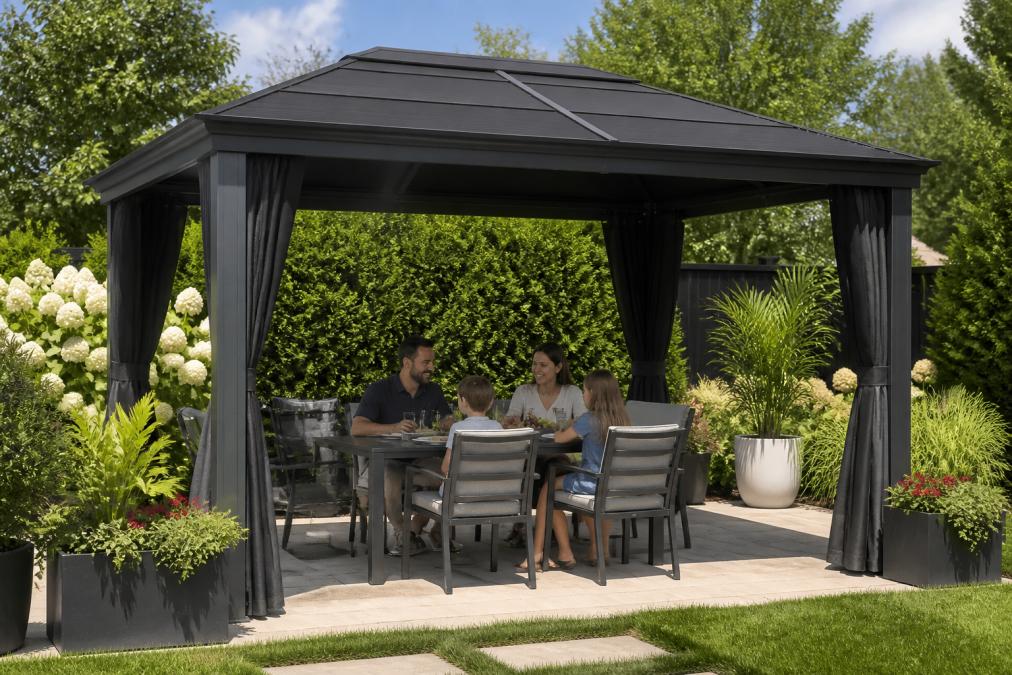
Furniture and layout: Place patio table and chairs under the gazebo to create a dining area.
Specialized gazebos: barbecue, pergolas, and outdoor fireplaces
Beyond traditional gazebos, specialized structures cater to specific uses. These models combine protection and functionality for particular activities.
Pro Tip
For homeowners who cook outdoors regularly, a barbecue gazebo with side shelves and a double roof provides the space and ventilation needed for safe and comfortable cooking.
Installation, anchoring, and site preparation
Proper installation ensures the stability and safety of the gazebo. Site preparation and anchoring are critical steps that are often overlooked.
Frequently Asked Questions
Which material should I choose for a durable gazebo in the Canadian climate?
To withstand Canadian conditions, opt for galvanized steel or powder-coated aluminum. Galvanized steel offers excellent resistance to corrosion and snow, while aluminum is rust-resistant and requires less maintenance. Polycarbonate or galvanized steel roofs provide effective protection against UV rays and snow accumulation. Hardtop models made of corrosion-resistant materials are preferred for their long-term durability.
What is the difference between a hardtop gazebo and a pop-up canopy?
Hardtop gazebos offer permanent and durable protection, ideal for fixed garden installations. They better withstand harsh weather and snow. Pop-up canopies are portable, easy to store, and suitable for temporary events or camping. For a permanent outdoor patio setup, a hardtop gazebo is more appropriate. Pop-up canopies are generally cheaper and offer more flexibility, while hardtop gazebos require a larger initial investment but provide seasonal protection.
How should I maintain my gazebo to extend its lifespan?
Outdoor gazebo maintenance includes regular roof cleaning, removing debris, and checking anchors. In winter, remove accumulated snow to avoid structural overloading. Inspect joints and expansion screws each season. For polyester or polycarbonate roofs, a gentle cleaning with soapy water is recommended. Secure curtains and mosquito nets during bad weather. Regular maintenance helps keep the gazebo looking its best.
What size gazebo should I choose for a standard patio set?
Common sizes are 10x10, 10x12, 10x13, and 12x15 feet. A 10x10 foot gazebo is suitable for a small yard or relaxation area. For a standard patio table with 4 to 6 chairs, a 10x12 or 10x13 foot unit offers the ideal space. A 12x15 foot model comfortably accommodates gatherings or barbecues. Measure your available space and leave at least 60 cm of clearance around the gazebo for circulation and maintenance.
Is a permit required to install a gazebo in my yard?
Requirements vary by municipality. Some require a permit for permanent structures, especially if the gazebo exceeds a certain height or surface area. Check with your local municipality before installation. Pop-up or temporary gazebos rarely require a permit. Respect zoning bylaws and minimum distances from property lines. Consulting your urban planning department avoids future issues and ensures compliance.
